.webp&w=3840&q=75)
Picking the “right” fund matters less than most people think. In reality, wealth is built over time through a few simple habits that are repeated year after year. Here are 10 of those habits.
1. Name Your Goal Before You Name a Fund
Retirement. A child’s education. A home down payment. An emergency buffer. Whatever it is, write it down first.
Take the example of Priya. She is 28 years old and wants to buy a home in seven years. This seven-year timeframe dictates almost everything for her. It determines how much equity exposure she should maintain, how much she needs to invest monthly, and when she should start shifting her investments into safer funds as the deadline approaches. Without this figure, most people tend to choose funds that performed well in the previous year, rather than funds that actually align with their specific plans.
So before you open a fund page, ask yourself: what is my goal, and how many years do I have?
Need Help? Request a Free Call from an Expert
Let our Experts guide you through your Investment journey. From Monthly SIP in any Fund to your Financial Planning.

2. Match Your Risk Comfort, Not the Fund’s Popularity
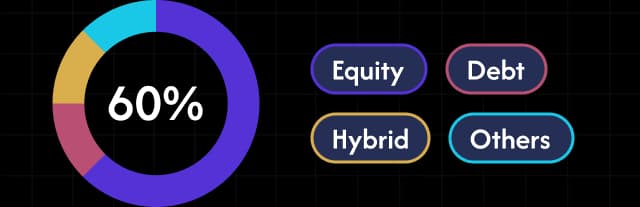
Equity funds move up and down a lot, but tend to reward patience over the long run. Debt funds barely move, and pay less because of it. Hybrid funds sit in between.
None of this is about which category performed best last year. It is about you, your age, how steady your income is, how many people depend on it, and how you would actually feel if your portfolio dropped 15% in a bad month. A 25-year-old with no dependents can usually take on more equity risk than someone five years from retirement. Choose the fund type that fits you, not the one that is currently popular.


Smart Investments, Bigger Returns

3. Invest your money in different types of funds.
Investing in large-cap, mid-cap, and small-cap equity funds, along with some debt funds, helps keep your portfolio balanced, especially when a particular category has a bad year. After all, every category goes through such phases.
4. Stop Trying to Time the Market
No one consistently succeeds in buying at the lowest price and selling at the highest, not you, not most professional fund managers, and certainly not anyone promising a foolproof method online.
5. A Market Dip Is Not an Emergency
Markets go down sometimes. That is normal, not a warning sign. Pulling your money out during a dip turns a temporary loss into a real one.
6. Review Your Portfolio on a Schedule, Not Every Day
Checking your portfolio once or twice a year is enough, along with a review after any major change in your life or goals. Checking your returns every single day usually creates worry, not better decisions.
Keep it simple when reviewing. Compare the fund’s performance over the last 3 to 5 years against its category, check if the fund manager has changed, and ensure that your goal and time horizon remain the same. That is all there is to it.
7. Be Suspicious of “Guaranteed High Returns”
There is no such thing as a guaranteed high return from a mutual fund. Returns depend on the market, and markets are never guaranteed. If someone promises you a fixed high return, that is a warning sign, not a good deal.
Scams and mis-selling tend to increase whenever more people get interested in investing. Before putting money into anything unfamiliar, check it directly through AMFI or SEBI.
8. Let a SIP Build the Habit For You
A Systematic Investment Plan takes a fixed amount from your account every month, on a set date, no matter what the market is doing that day. That automatic habit is the whole point.
9. Take Advice, But Make the Final Call Yourself
A good financial advisor can genuinely help you avoid common beginner mistakes. That is real and worth using.
10. Understand What You Are Paying For
Every fund charges a small annual fee known as the 'expense ratio.' This covers the cost of managing the fund as well as ongoing assistance from the advisor or distributor, such as helping you select the fund, completing paperwork, and periodically reviewing your investment.
This kind of support matters, especially if you do not have the time to track fund performance, watch for changes in fund managers, or follow every market shift yourself. Before you invest, it is worth knowing that this fee is not just a number on a page. It is what keeps your investment journey guided and on track.
Disclaimer: This analysis is based on historical performance and market trends. Mutual fund investments are subject to market risks, and actual returns may vary. This content is for informational purposes only. Please read all scheme-related documents carefully before investing.