When we talk about the Quant Small Cap Fund review, the story of it is a bit of a turnaround. A fund that has historically been an underperformer despite being in existence since 1996, started outperforming its category average over the long term. But why? Well, this transformation happened in 2020 when it came under the management of Mr Ankit Pande and the implementation of the VLRT framework.
In fact, it became one of the top-performing funds that gave annualised growth of around 24.29% for 5-year returns and became a favourite choice of every investor. So much so that between 2022 and 2024, it outperformed the benchmark so well that people started investing in it without giving a second thought.
But since 2026 started, this fund has kind of underperformed and has stayed highly volatile. So, as an investor, what does this mean for you? Is the Quant Small Cap Fund good? And should you invest in this now? Below is a complete analysis of the Quant Small Cap Fund, so that you can make a better decision about your investments in 2026!
Buy Digital Gold Online Safely and Start Your Gold Journey at Just ₹100 now

Quant Small Cap Fund Overview
Before we go into a deep Quant Small Cap Fund review, let us first take a look at its story. The Quant Small Cap Fund was originally launched on 29 October 1996, meaning the fund has been in the business for the last 30 years and has a long track record. Knowing this is especially important when evaluating small-cap funds that go through multiple market cycles.
But 2018 is when the Quant Small Cap Fund saw a pivot when Quant Capital acquired Escorts Mutual Fund and brought Quant Small Cap (formerly known as Escorts High Yield Equity Plan) under new management. This brought major Quant Small Cap Fund portfolio changes along with a different investment strategy.
Moreover, the fund has a multi-manager team and is currently managed by Sandeep Tandon, Ankit Pande, Varun Pattani, Ayusha Kumbhat, Yug Tibrewal, Sameer Kate, and Sanjeev Sharma.
Must Read: Top 10 High Return Mutual Funds in India
Portfolio Analysis of Quant Small Cap Fund
Let’s take a look at the Quant Small Cap Fund portfolio to better understand its investing approach and whether it is worth it for you to invest in it now or not. Below are its top stock holdings:
| Company Name | Portfolio Weight (%) | Sector |
|---|---|---|
| Reliance Industries Ltd | 9.36% | Energy |
| RBL Bank Ltd | 4.38% | Financial Services |
| Sun TV Network Ltd | 3.43% | Communication Services |
| Adani Power Ltd | 3.06% | Utilities |
| Jio Financial Services Ltd | 2.85% | Financial Services |
| Piramal Finance Ltd | 2.73% | Financial Services |
| Aster DM Healthcare Ltd | 2.68% | Healthcare |
| Anand Rathi Wealth Ltd | 2.64% | Financial Services |
| HFCL Ltd | 2.23% | Technology |
| Aegis Logistics Ltd | 2.17% | Energy |
When you look at this table, you will see that the portfolio of the Quant Small Cap Fund is well-diversified. As of now, it holds 100-110 stocks. However, if you see the data closely, you will understand that the top 10 of its stock holdings account for around 38-39% of its total assets. Which means that its portfolio is relatively concentrated, but still provides a good balance of conviction vs. spread.
Sector Allocation
Here is the sector allocation of the Quant Small Cap Fund:
| Sector | Fund (%) | Category (%) |
|---|---|---|
| Financial | 20.69% | 21.95% |
| Energy & Utilities | 16.63% | 3.19% |
| Consumer Discretionary | 15.7% | 13.93% |
| Healthcare | 15.36% | 13.07% |
| Materials | 10.32% | 13.15% |
As you can see, the fund has a concentrated investment in Financial services and Energy. Moreover, the fund is mainly focused on sectors like financials, energy/power, and healthcare. Like many actively managed Equity Funds, it benefits from trends like improving banks, growth in infrastructure and energy, and rising innovation in healthcare, especially within smaller companies.
At the same time, its VLRT-based approach also keeps some exposure to more stable, liquid stocks. This helps reduce sharp losses while still staying positioned to benefit if small-cap stocks perform well.
Must Read: Top 5 SWP Mutual Funds 2026
Current Market Position
And as of March 2026, the fund’s AUM stands between ₹27,653.65 Cr - ₹27,654 Cr, with a current NAV of Rs.247.04. Moreover, on an average, the Quant Small Cap Fund returns is of 12% to 16.8% since its launch, whereas around 30%+ returns in specific 3-5 year periods. Below are its recent returns:
| Benchmark / Fund | 6 Month Ret (%) | 1 Yr Ret (%) |
|---|---|---|
| Quant Small Cap Fund | -12.44% | 2.78% |
| Category Average | -12.58% | 6.14% |
| NIFTY SMALLCAP 250 TRI | -14.67% | 17.61% |
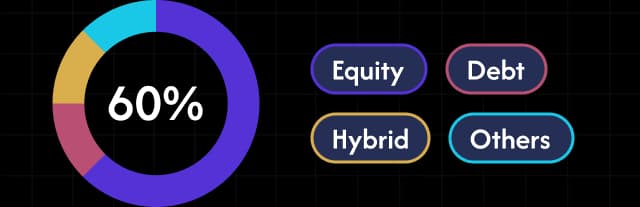
Currently, the fund holds a strong as well as significant position in the Indian small-cap category. While yes, it is currently experiencing high short-term volatility and a dip in Quant Small Cap Fund performance, it has still remained as a top-tier performer over longer horizons. Moreover, the fund has highly aggressive equity exposure and has the following asset and market cap allocation:


Best Mutual Funds for 2026 Backed by Expert Research

Quant Small Cap Fund Performance Analysis
Historically speaking, the Quant Small Cap Fund has performed exceptionally well in the small-cap category and has consistently beaten its benchmark, which is NIFTY Smallcap 250 TRI, and its category average. This is especially true for over 5 to 10 year period.
However, recently, the fund’s performance has taken a dip and it has entered a period of relative cooling.
| Period | Absolute (%) | Category Average (%) | Rank in Category |
|---|---|---|---|
| 2026 | -4.91% | -2.08% | 35/34 |
| 2025 | -1.36% | -4.15% | 12/30 |
| 2024 | 23.50% | 26.90% | 21/28 |
| 2023 | 48.05% | 41.49% | 7/25 |
| 2022 | 11.20% | 1.78% | 1/24 |
| 2021 | 91.73% | 63.34% | 1/23 |
| 2020 | 76.13% | 31.09% | 1/20 |
| 2019 | -23.24% | -1.11% | 18/18 |
| 2018 | 3.10% | -16.86% | 1/15 |
| 2017 | 5.26% | 56.64% | 13/13 |
As you can see in the data, in the last couple of years, the fund has underperformed in comparison to its benchmark and category average. But despite this, the CIO of Quant Mutual Fund, Sandeep Tandon holds a positive attitude as the fund’s AUM and NAV is at lifetime high and has maintained the trust of long term investors.
Rolling Returns and Consistency
During Quant Small Cap Fund review, one thing you should primarily look into is the fund’s rolling returns and consistency. You can take a look at the graph below to see the Quant Small Cap Fund’s 3 year and 5 year rolling returns and consistency
| Benchmark / Fund | 3 Yrs Returns (%) | Consistency (%) | 5 Yrs Returns (%) | Consistency (%) |
|---|---|---|---|---|
| Quant Small Cap Fund | 36.23% | 100% | 36.37% | 100% |
| NIFTY Smallcap 250 TRI | 24.54% | 91.43% | 25.12% | 86.04% |
The fund is outperforming the index by ~11–12% annually, which is massive in mutual funds terms. And when it comes to its consistency, the fund has also beaten the benchmark in every rolling period. Meaning it has been consistently better.
Moreover, this fund is not just rising with the market, but is also adding real extra returns and it also has good strategy executing and strong fund management discipline.
SIP Returns
When looking at the Quant Small Cap Fund review, it is clear that this fund has been one of the top performers. And this is true for SIP returns as well in the small-cap category. However, like most small-cap funds, it has also gone through phases of volatility, including a recent cooling-off period. When it comes to investment details, these are as follows:
- Minimum SIP Amount: ₹1,000
- Minimum Lumpsum Investment: ₹5,000
Quant Small Cap Fund Expense Ratio:
- Regular Plan: 1.64%
Exit Load:
- 1% if redeemed within 1 year
- Nil after 1 year
As of March, 2026 its SIP performance is as follows for the Regular Growth Plan:
- 3 Years:85%
- 5 Years:35%
So, for example, if you invest ₹5,000 per month for 5 years and let’s say your investment grows at a rate of 24% annualised return (based on the SIP performance), your total investment can grow to ₹5.5–6 lakh. Similarly, you can use SIP calculator to estimate how your monthly investments can grow.
Stocks Quality
To understand the underlying characteristics of Quant Small Cap Fund portfolio, you will have to look beyond just its returns. There are metrics like P/E ratio, earnings growth, sales growth, and cash flow growth which will give you a clearer picture of the type of companies the fund is investing in. As for Quant Small Cap Fund, it is as follows:
| Benchmark / Fund | P/E | Earnings Growth (%) | Sales Growth (%) | Cash Flow Growth (%) |
|---|---|---|---|---|
| Quant Small Cap Fund | 21.12 | 22.82% | 5.33% | 7.53% |
| Category Average | 20.91 | 15.03% | 10.21% | 9.78% |
The slightly higher P/E ratio (21.12) shows that the fund is investing in stocks that are priced at a premium compared to the category. This is typically a sign of a growth-oriented strategy, where the fund manager is willing to pay more for companies expected to deliver strong future earnings.
This is supported by the significantly higher earnings growth (22.82%), which suggests that the Quant Small Cap Fund portfolio companies are indeed generating strong profit growth, an encouraging sign for long-term wealth creation.
Risk Metrics vs. Benchmark (As of March 2026)
Let’s compare Quant Small Cap Fund and see if it’s actually performing well or not to understand whether is Quant Small Cap Fund good or not.
| Metric | Quant Small Cap Fund | Nifty Smallcap 250 TRI | Interpretation |
|---|---|---|---|
| Alpha | ~17.38% | 0.00% | This shows that the fund is generating higher returns than its benchmark while taking a similar level of risk. |
| Beta | ~0.88 | 1 | While its price moves significantly, it is slightly less sensitive to market fluctuations than the index. |
| Sharpe Ratio | ~0.78 | ~0.72 - 0.80 | Indicates risk-adjusted returns; values below 1.0 are generally considered moderate. |
| Std. Deviation | ~18.06% | ~21.52% | Shows price volatility; the fund has been less volatile than the index over the long term. |
Over the long term, the Quant Small Cap Fund has done a great job by beating its benchmark by a healthy margin. But in the short term, its performance has been a bit weak, and recent Quant Small Cap Fund returns have even slipped below the index. The fund is also slightly less affected by market ups and downs (thanks to its lower beta). This means it can be a bit more defensive at times.
When it comes to risk vs. return, it is doing okay and is in line with the benchmark. While the fund has been less volatile than the index over the long run, it has seen some sharp swings recently. But the good part is that it managed to fall less than the index during the latest dip.
Fund Manager & Process Credibility
The credibility of any small-cap fund largely depends on two things. Who is managing the money and how are the investment decisions made? In the case of the Quant Small Cap Fund, both aspects stand out.
Fund Manager Expertise
The fund follows a team-managed approach, and this is a core part of Quant’s investment philosophy. Instead of relying on a single fund manager, decisions are driven collectively using their proprietary VLRT framework.
The leadership influence of Sandeep Tandon, which is combined with a strong multi-manager setup, brings deep expertise in quantitative and valuation-driven investing. The addition of Yug Tibrewal around 2025 further strengthens the team with fresh tactical insights.
Another key strength is their ability to balance aggression with defence. During the 2025–26 volatility phase, the fund maintained a defensive large-cap allocation, which helped limit downside while still capturing small-cap upside.
Research & Investment Process
The investment strategy of the Quant Small Cap Fund combines both top-down and bottom-up approaches. This helps in ensuring that it has a well-rounded portfolio construction:
- Top-Down Approach: The team first identifies high-potential sectors based on:
- Economic cycles
- Market trends
- Macro opportunities
For example, sectors like Energy or Financials may be overweighted when favourable conditions arise.
- Bottom-Up Stock Selection: Within those sectors, the fund selects companies with:
- Strong earnings growth potential
- Improving cash flows
- Attractive or undervalued valuations
This ensures that stock selection is not just thematic but also fundamentally sound.
- Dynamic Flexibility: A key differentiator is the fund’s high flexibility, allowing it to:
- Shift across market caps (small, mid, large)
- Rotate between sectors
- Adjust positioning based on liquidity and risk conditions
Risks Involved in Investing in Quant Small Cap Fund
While the Quant Small Cap Fund has delivered strong returns in the past, it comes with a “Very High” risk profile. So before you invest, it is important that you understand the kind of risks you are taking. Especially since small-cap funds can behave very differently from large-cap or index funds.
- High Volatility:Small-cap stocks are naturally more volatile, meaning their prices can move sharply up or down. And in this fund’s case, volatility is even higher as the standard deviation is 19.73, and the benchmark is 17.57. This means the fund can rise faster in bull markets, but also fall more sharply during corrections.
- Liquidity Risk:Due to its large size and exposure to smaller companies, it may take up to ~102 days to sell 50% of its portfolio in stressed conditions. So, during market panic, the fund may not be able to exit positions quickly, which can worsen losses.
- Strategy Risk:The fund follows a VLRT strategy, and the risk here is that if the market trends suddenly change or the model misreads signals, the fund can underperform sharply in the short term.
- Concentration Risk:Even though the fund holds 100+ stocks, the top 10 holdings often make up over 35% of the portfolio. This means a few stocks can significantly impact overall Quant Small Cap Fund performance, for better or worse
- Model & Algorithm Risk: The fund relies heavily on quantitative models (data-driven algorithms). These models can act like a “black box.” If something goes wrong or markets behave unusually, results may be unpredictable
Should You Invest Now?
The Quant Small Cap Fund is a classic high-risk, high-reward investment. It has proven its ability to deliver strong returns over time. But it also comes with noticeable short-term volatility. This means you should only consider investing if you have a long-term horizon of at least 5 years. And most importantly can comfortably handle market ups and downs and are not relying entirely on small-cap funds for your portfolio.
This fund can be a strong choice for aggressive investors looking to generate higher returns from the small-cap segment. However, it’s better to either avoid it or keep your allocation limited if you prefer stable returns or tend to panic during market corrections.
A smart approach would be to invest through SIP instead of a lump sum, keep exposure to around 10–20% of your portfolio, and balance it with large-cap or index funds for stability. You can also use a Quant Mutual Funds Calculator to estimate potential returns and plan your investments more effectively.
Overall, this fund works best as a satellite allocation; it can perform exceptionally well during market recoveries, but may feel volatile during corrections (as seen in 2025–26).
FAQs
-
Is Quant Small Cap a Good Fund?
Yes, Quant Small Cap Fund is considered a good fund for long-term investors. It has delivered strong returns and shown good consistency in the past. However, it is also highly volatile, so it’s best suited for investors who can stay invested for 5+ years and handle ups and downs.
-
What is the 5-year Return of Quant Small Cap Fund (Growth)?
The 5-year return of the Quant Small Cap Fund (Growth) is around 24% (SIP returns) and ~36% (rolling/lump sum returns) based on recent data. This is significantly higher than the category average, showing strong performance over the long term.
-
Why is Quant Mutual Fund falling?
Quant Mutual Fund may fall due to a few reasons:
- Small-cap stocks are volatileand fall more during market corrections
- The fund follows an active and momentum-based strategy, which can underperform when trends reverse
- Recent market cooling (2025–26)has impacted many small-cap funds
-
Should I Stay Invested in Quant Small Cap Fund in 2026?
If your goal is long-term (5+ years), then yes, you can stay invested. Short-term volatility is normal in small-cap funds. However, make sure:
- You are comfortable with risk
- It is only a small part (10–20%) of your portfolio


.webp&w=3840&q=75)
.webp&w=3840&q=75)
.webp&w=3840&q=75)